


1 / 5
A sleek, ultra-thin case with Fusion Weaving style.
- Crafted with aerospace-grade aramid fiber and Fusion Weaving
- Featherlight and exceptionally slim for everyday comfort
- MagSafe compatible and wireless charging-friendly
- Signature woven texture offers an enhanced in-hand feel
- Scratch-resistant and made to resist fading over time
- Thickness: Approx. 1.16 mm; Weight: Approx. 19.2 g / 0.68 oz
- 2 months warranty
Product Comparison
EdgeThe Art of Minimalism.
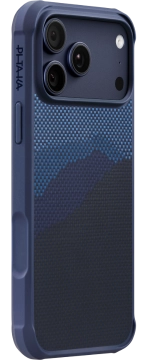
CairnThe Path of Protection.
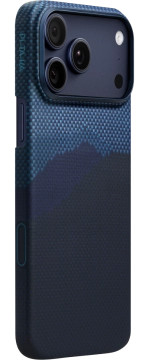
Incredibly Slim & Light
Protective and Drop-resistant
Weight
≈ 20 g
≈ 20 g
Weight
≈ 35 g
≈ 35 g
Thickness
≈ 0.99 mm
≈ 0.99 mm
Thickness
≈ 2 mm
≈ 2 mm
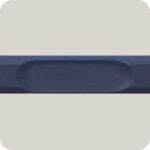
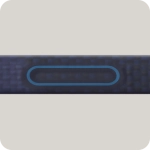 PitaTap™
Aramid Fiber Camera Control
 Perfect Touch Coverage
Ultra-thin Molded Precision
 Daily Protection
 Arched Corner Cushioning
Ultra Protection (Max)
MIL-STD-810H · 2.44m Drop Test
Note: The data is obtained from PITAKA lab tests using an iPhone 17 case as the sample.
There may be slight variations depending on the device model.


You May Also Like


Q. What happened to the Ultra-Slim, ProGuard, and UltraGuard Cases?
We've updated our case series names. Edge (formerly Ultra-Slim), Cairn (formerly ProGuard), and Summa (formerly UltraGuard) now reflect the experience, not just the specs. Edge: slim, light, and sharp along the climb. Cairn: firm and dependable, like stone markers that guide the way. Summa: the peak, where protection and hand-feel come together.
Q. Can PITAKA's phone case work with Apple's MagSafe accessories?
A. Yes, PITAKA cases are compatible with Apple Official MagSafe accessories.
Q. Is the case anti-fingerprint?
Our Phone case is made with aramid fiber and processed with 3 layers of paint to ensure it's skin-friendly and non-slip. Whether a fingerprint mark will be left depends on your hand conditions. It is not easy to leave a fingerprint if the hand is dry. For sweaty hands, fingerprint marks may be left, but it is very easy to clean with a cloth/Nano cotton/eraser/alcohol pad.
Q. With this case, can I charge my phone on third-party wireless chargers?
PITAKA cases are embedded with magnetic rings that do not cover the wireless charging area and highly fit with the magnetic ring built in the iPhone &Samsung series. Plus, it's super slim. So if your phone can be charged on third-party wireless chargers, it should work even with the case on.
Q. Why does magnetism seem to be weaker than in previous phone cases? For example, the iPhone 13 series.
Too strong a magnetic force may have a negative impact on the charging speed. We have fine-tuned the magnetic force of the new phone case to ensure that it provides safe magnetic force while ensuring charging efficiency.
Q. What's the difference between the 600D aramid fiber and the 1500D aramid fiber?
A. Essentially, 600D aramid fiber is a thinner thread, whereas 1500D aramid fiber is a thicker thread. The 600D version will feel more delicate to the touch and the case is slightly thinner.
You can read more about the difference here.
You can read more about the difference here.
Q. Why does the "StarPeak" phone case have a textured pattern on the back?
We wanted to provide users with a more three-dimensional tactile experience with the "StarPeak" phone case. To achieve this, we incorporated a technique known as jacquard weaving into the Fusion Weaving process. This technique involves weaving patterns by interlocking warp and weft threads to create a textured and raised design.
Jacquard weaving itself has the characteristic of being different on the front and back. The front features a woven pattern texture, while the back consists of interwoven threads. What appears to be a single-layer effect is actually the result of two layers of aramid fibers intertwining. Due to the presence of multiple layers of aramid fiber in certain areas, a textured pattern is formed when the phone case is molded (similar to how patterns in knitted sweaters may appear raised). This is a trace of our craftsmanship, reflecting the weaving process and adding to the handmade charm.
The irregular pattern signifies a more complex weaving process, which requires additional manual craftsmanship. If you are concerned about the traces of handwork, think carefully before buying.
Jacquard weaving itself has the characteristic of being different on the front and back. The front features a woven pattern texture, while the back consists of interwoven threads. What appears to be a single-layer effect is actually the result of two layers of aramid fibers intertwining. Due to the presence of multiple layers of aramid fiber in certain areas, a textured pattern is formed when the phone case is molded (similar to how patterns in knitted sweaters may appear raised). This is a trace of our craftsmanship, reflecting the weaving process and adding to the handmade charm.
The irregular pattern signifies a more complex weaving process, which requires additional manual craftsmanship. If you are concerned about the traces of handwork, think carefully before buying.
For more FAQs, please visit our FAQ Center.